
Australian Shepherd Puppy in France: Health, LOF, Breeders
What health screening, LOF papers and breeder questions really establish before you choose an Australian Shepherd puppy in France.
Expert insights into canine genetics, from MDR1 mutations to coat color inheritance. Science-based information for breeders and dog owners.
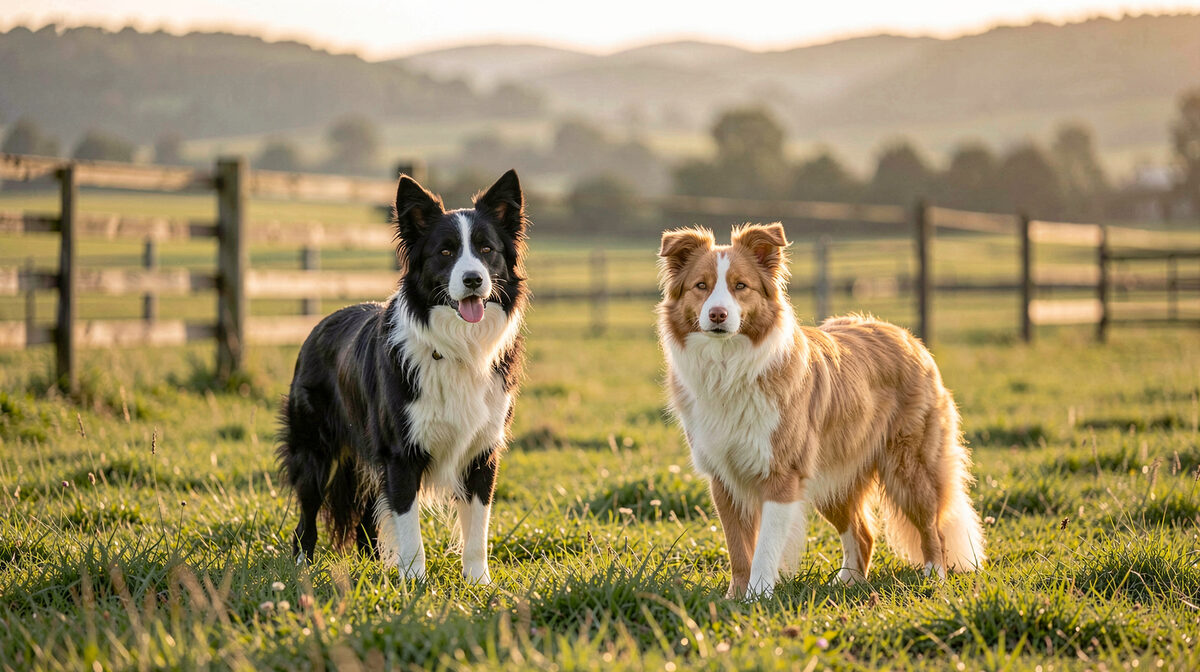
What health screening, LOF papers and breeder questions really establish before you choose an Australian Shepherd puppy in France.

How families compare private addiction treatment providers in the US: levels of care, sober living versus residential, cost, confidentiality and what to verify

How the inherited health profile of Golden Retrievers shapes screening decisions for owners and breeders in Australia, and what results mean over a dog's life.

How function shaped the Samoyed, Borzoi, Caucasian Shepherd, Black Russian Terrier, West Siberian Laika and Russkiy Toy, and how breed legends are verified.

What FCI standard 352 fixes for the Russkiy Toy, how much tsarist history is documented, and what buyers should verify about health in a very small breed.

How adult, paediatric and neonatal ventilator breathing circuits differ, why heated wire circuits still collect condensation, and how anaesthesia circle

You don't have to cull every carrier to eliminate a recessive disease. Here is the math that lets you breed it out gradually while protecting your breed's gene pool.

Three genes — FGF5, RSPO2 and KRT71 — explain rough vs smooth Collies and Border Collie coat variation, and let you predict coat type in a litter before the puppies are born.

Two dogs with identical at-risk DNA results can end up worlds apart. Here is why genotype is not destiny, and how to read a panel report honestly.

A malformed drainage angle in the eye can trigger sudden, painful blindness — and a 'low-risk' DNA result is not enough to rule it out. Here's why screening still matters.

A faulty CUBN gene stops young Border Collies absorbing vitamin B12 — but unlike most inherited diseases, this one is testable and fully treatable.

Why a dog's own hip or elbow score is a weak predictor of what it will pass on — and how EBVs use the whole family to make better breeding decisions.
For breeders weighing small-breed genetics against breed standards, this Bolonka Zwetna breed guide covers FCI standard 286, health and grooming, and how to judge a breeder.
For owners who want practical, verified guidance in Czech, this Czech-language puppy and breed guide covers whelping, first-week routines, feeding by age, socialization, pedigree reading, breed portraits, and everyday health topics such as ticks and label reading.
For French-speaking owners, Caniblog offers everyday dog care guidance spanning puppy to senior: breed portraits, behaviour, prevention, feeding and equipment, with practical questions to bring to a veterinarian.
For readers who want a French perspective on responsible dog adoption in France, this outlet covers shelter and breeder pathways, mandatory documents, acquisition costs, and the warning signs of common scams.
For owners who handle routine care themselves, this set of French home pet care guides covers nail trimming, ear cleaning, dental brushing, food amounts, and household toxic risks for dogs and cats.
Readers comparing breeds before adoption can consult Dogref, a French encyclopaedia that organises breeds by FCI group, size and status, then filters candidates by lifestyle, housing and experience level, with a dog breed reference by FCI group built for first-time owners and families.
For breeders comparing inherited disease across terrier lines, a French documentary archive gathers Bull Terrier pedigree archives covering ancestry charts, LOF registration, breed standards, inbreeding coefficients and DNA testing.
For owners weighing a miniature against a kaninchen, this kaninchen dachshund notebook sets out chest circumference measurement, the distinction from the nain, back health and weight prevention, and reasoned purchase guidance.
The Herding Gene is authored by Dr. Emily Watson, PhD Molecular Genetics, UC Davis. With 18 years of research experience and over 40 peer-reviewed publications, Dr. Emily Watson brings academic rigor to accessible canine genetics education.
Learn More About Our Research